
Source paper: Coal Mining in the Hunter Valley - A Strategic Mine Planning Case Study - Wharton, C. (2009)
The Hunter Valley paper describes Rio Tinto Coal Australia operations where Bengalla, Hunter Valley Operations, and Mount Thorley Warkworth each had their own mining, processing, equipment, and product realities while sharing broader infrastructure such as rail and port capacity. The planning problem was not only to improve one mine schedule, but to understand how decisions interacted across a portfolio.
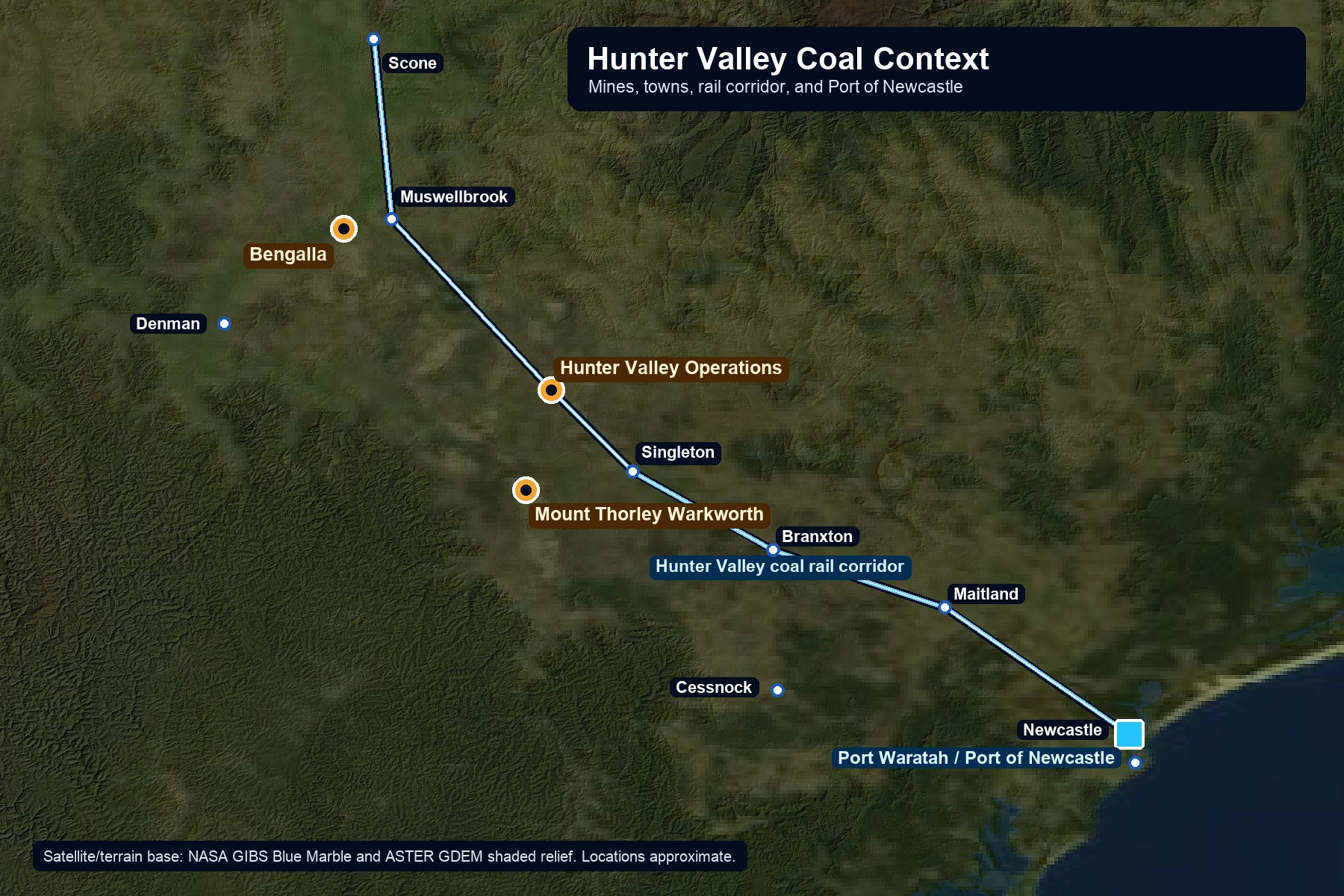
The context map below places those referenced operations in the Hunter Valley coal chain and shows the major nearby towns and export infrastructure. The point is not survey precision, but planning context: these mines sit inside a shared regional system where rail paths, wash plants, product strategy, and the Port of Newcastle can become portfolio constraints rather than mine-by-mine details.
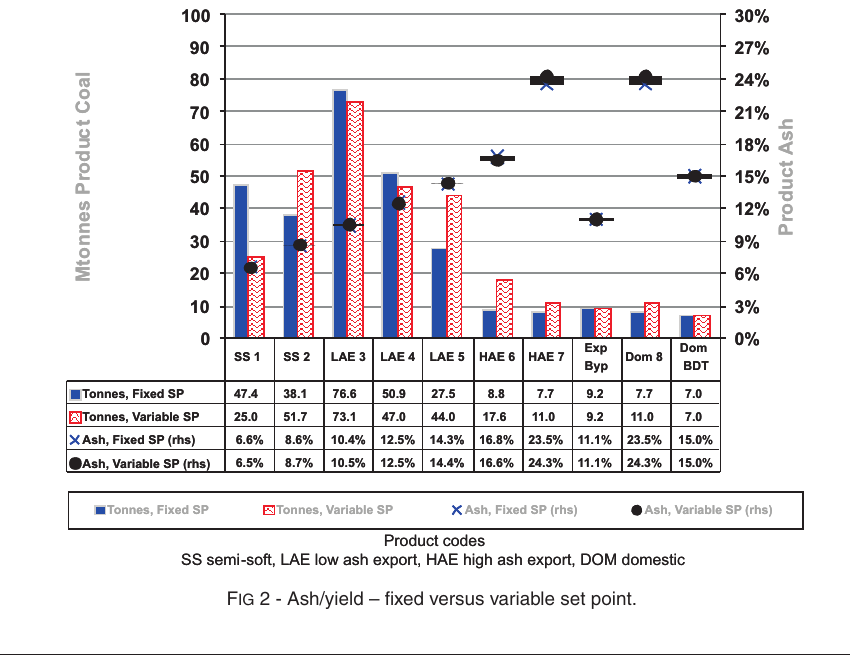
Coal planning is highly sensitive to product strategy. Wash plant density set points alter yield, product ash, and coal class. A fixed setting may look operationally simple, but the paper shows that variable set points can shift product mix and increase total yield while preserving product specifications. That type of decision is difficult to evaluate properly unless product value, wash yield, ash, mining constraints, and schedule timing are considered together.
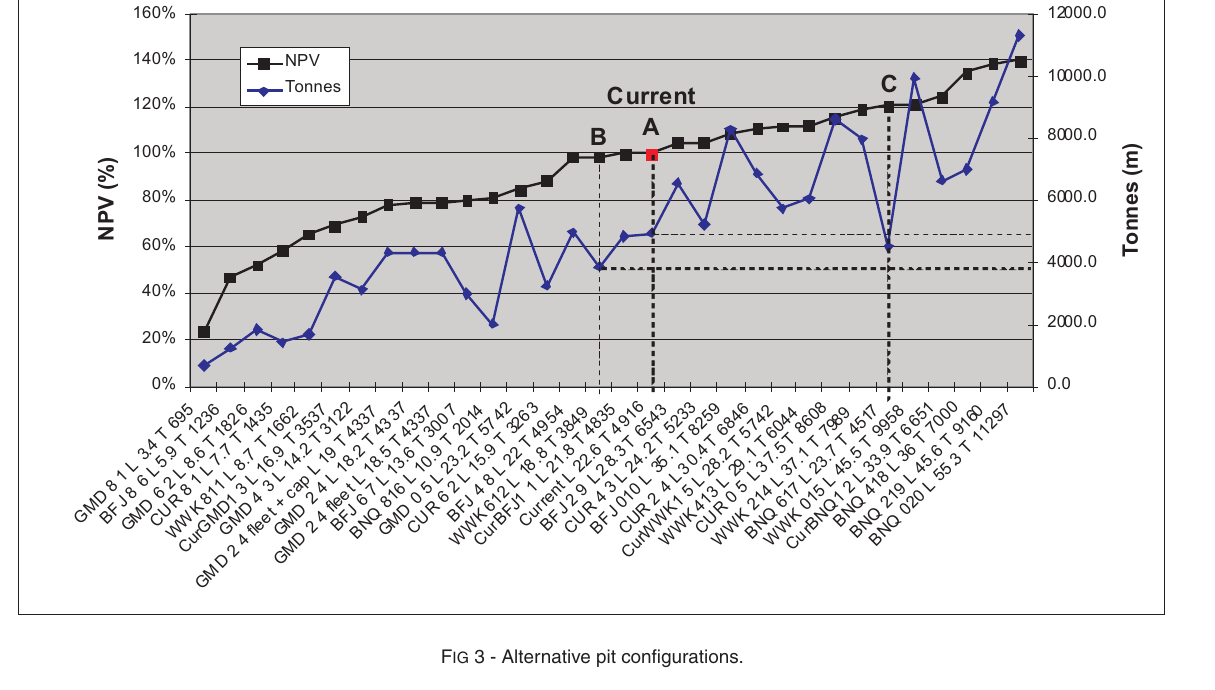
Pit configuration decisions created a second layer of strategic choice. The paper compared many pit floor and extent combinations, plotting tonnage and NPV together. Some cases produced similar NPV with much less tonnage; others produced comparable tonnage but higher NPV. The useful decision was not simply which pit was larger, but which option created the best value once the schedule, equipment, product strategy, and mine life were treated consistently.
Once each mine was calibrated, the model could be expanded into an integrated Hunter Valley model. That integrated view maintained the individual mine, plant, and equipment limits, while adding shared rail and port constraints. It allowed expansion options, plant locations, truck/conveyor alternatives, and coal-field development decisions to be assessed on a common basis rather than through isolated site studies.
The paper also highlights a long-life mine problem: as mine life stretches beyond roughly 18 to 20 years, late tonnes can contribute little to NPV. That does not make them irrelevant, but it means the planner needs additional discipline when choosing between similar-NPV alternatives, especially when risk, product quality, early-period cash flow, and infrastructure position differ.
The practical insight is that multi-mine optimisation is not a reporting exercise. It is a different planning frame. It asks which linked combination of policies, schedules, equipment, and infrastructure creates the best whole-of-business value across the portfolio.