
Source paper: Optimising a Combined Open Pit and Underground Strategic Plan - Roberts, B.; Elkington, T.; van Olden, K.; Maulen, M. (2009)
The Roberts paper examines a large open pit planned at the site of an existing underground mine. The strategic issue was that the underground and open pit options were competing for the same orebody. Mining material early from underground could create value, but it could also remove material from the future pit and disrupt the pushback sequence that drove the broader project value.
The study therefore needed a way to identify which stopes should genuinely be considered for underground extraction ahead of the pit. The paper developed an incremental value ranking variable that compared the discounted value of mining a block from underground with the value of leaving that block for the open pit. Blocks with positive incremental value became candidates for stoping, but that still did not guarantee they belonged in the final combined plan.
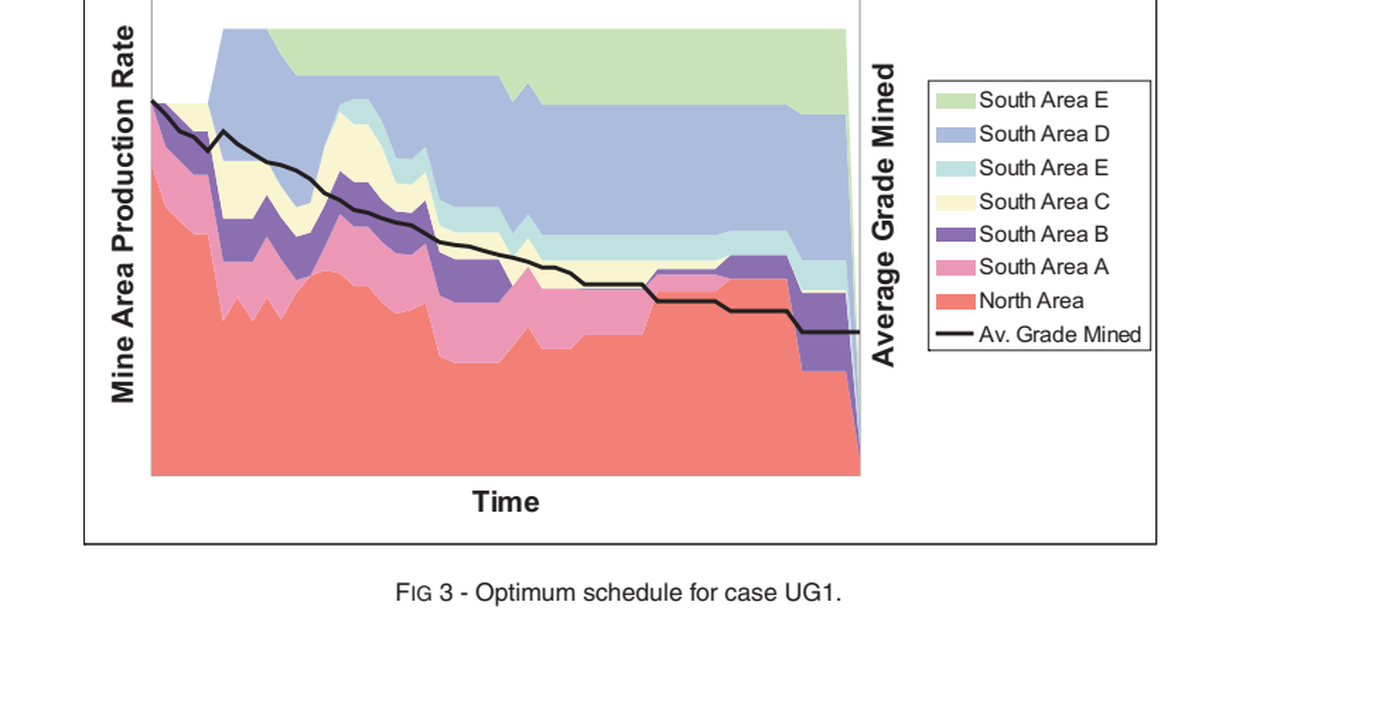
From that candidate resource, stope shells were generated at a range of cut-offs and then scheduled with a mixed integer programming approach. The underground optimiser honoured mining capacity, processing capacity, development capacity, reserve, and sequencing constraints. This gave the planners a conceptual underground strategy that could be tested alongside the pit plan.
COMET was then used to optimise the combined open pit and underground schedule. In the final stage, the underground options were treated as a dummy open pit pushback, while the pit plan used the optimised pushback sequence. COMET could choose whether underground ore should fill plant shortfalls, be processed immediately, or be stockpiled for later processing.
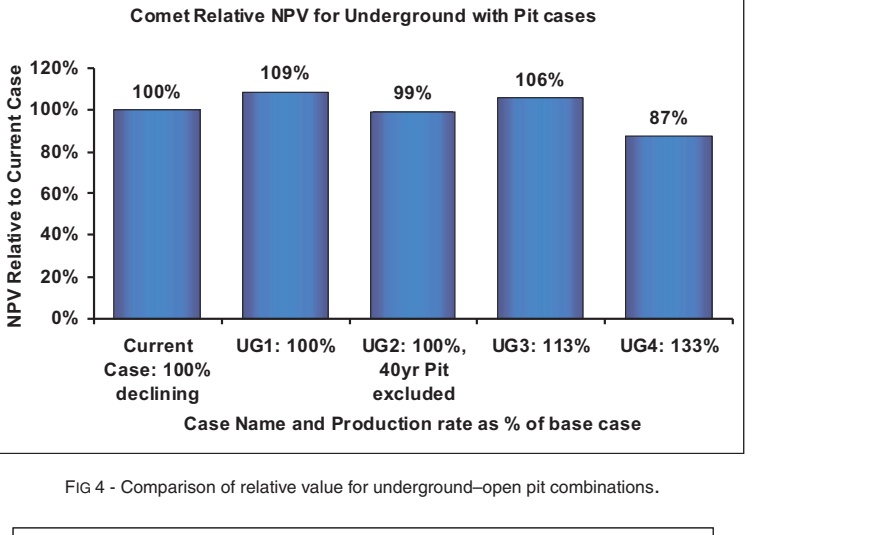
The relative value comparison showed the importance of the combined view. Case UG1 produced 109 per cent of the current-case NPV, while other higher-rate options did not automatically create more value. UG4, with 133 per cent of the base production rate, fell to 87 per cent of current-case NPV. More underground production was not the same thing as a better strategic plan.
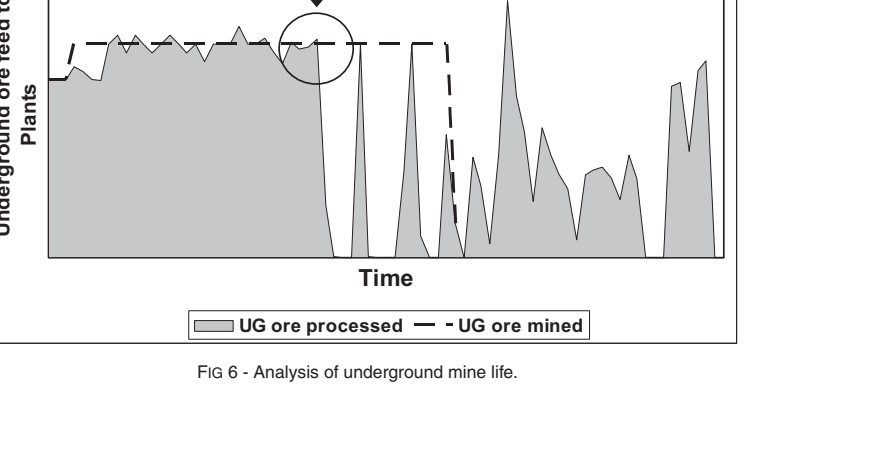
The paper also identified an important closure signal. The combined schedule indicated a point where open pit ore became the preferred plant feed and underground closure could be considered. That is exactly the kind of timing decision that is easy to miss if the underground and open pit are evaluated as separate projects rather than as one constrained production system.
The practical lesson is that combined open pit and underground planning is a value-allocation problem. The right plan protects the pit value, uses underground ore where it helps the whole system, and lets the optimiser test timing, stockpiling, processing, and closure decisions together.