
Source paper: Operational complexity in long-term planning of open pit - Alvarez Becerra, M. (2017)
The source paper was written in Spanish and presented from a Chilean open-pit mining context. The figures below are taken from the English translation kept with the COMET papers library, while the source link points to the public paper listing.
The operational complexity paper starts from a recurring problem in open pit planning: long-term plans are often questioned once they reach the operating team. The schedule may meet plant feed and value targets, but the business still needs to know whether the equipment, phase geometry, vertical separation, and haulage routes make the plan realistically executable.
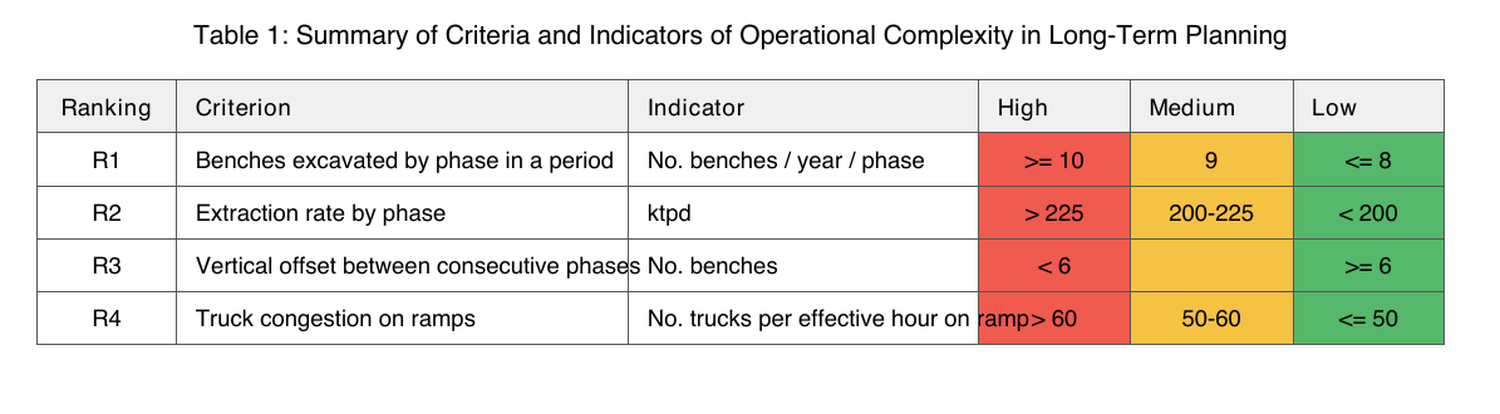
The paper proposes four practical complexity rankings: banks excavated per phase per year, extraction rate by phase, vertical lag between consecutive phases sharing a wall, and truck congestion on ramps. These are not abstract planning preferences; they are indicators of whether the plan is asking the operation to do too much, too tightly, in the wrong place, or at the wrong time.
The methodology uses high, medium, and low complexity ranges. For example, excavating ten or more benches per year in one phase is treated as high complexity, while the extraction-rate and ramp-congestion indicators flag periods where loading capacity or truck flow may be stretched. The point is not that every mine should use the same thresholds, but that each operation should define thresholds that reflect its own practical capability.
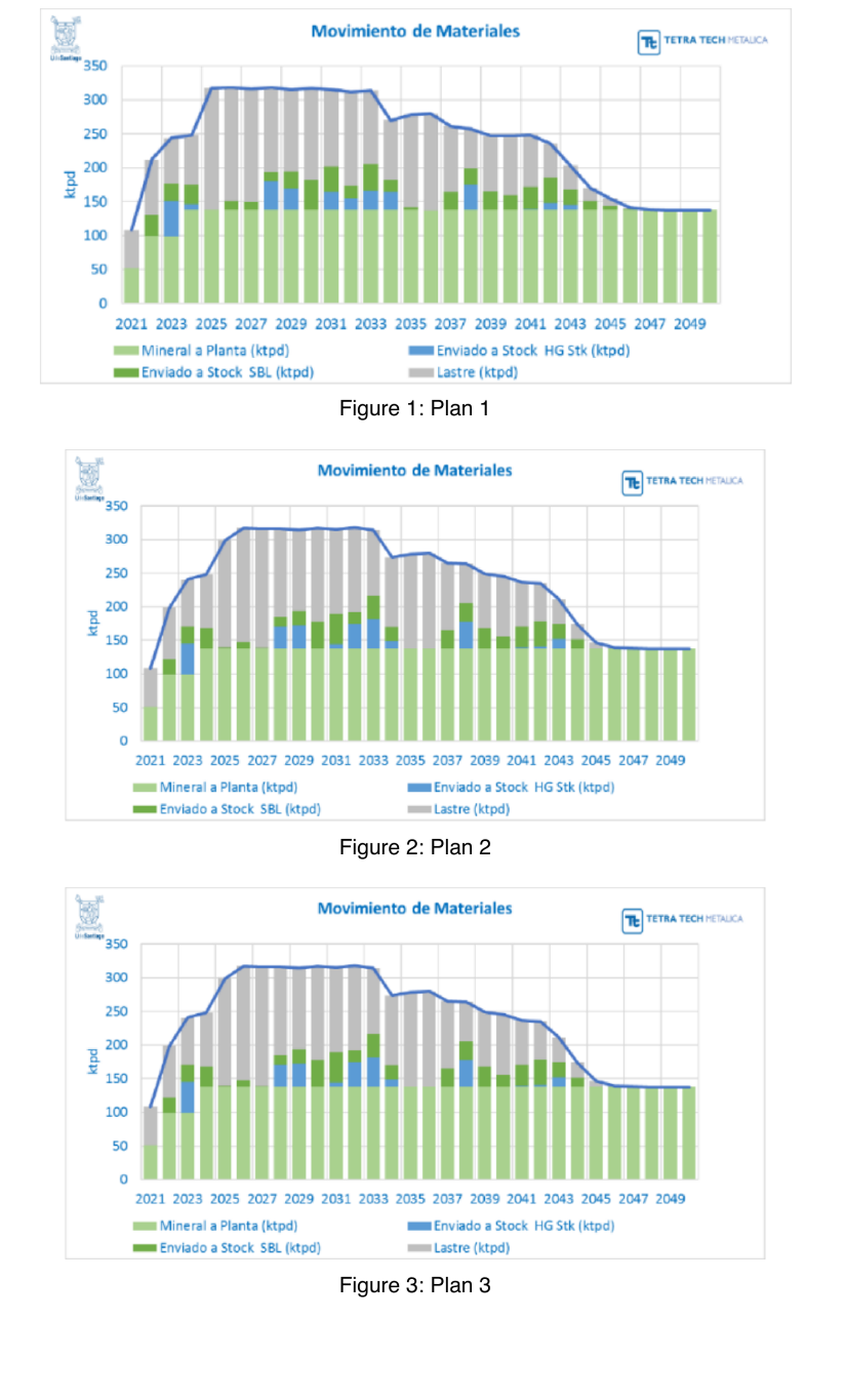
The paper applies the method to three long-term mine plans for the same deposit, with the same broad planning criteria and standard acceptance metrics. The plans filled the plant and used the same mine size, but the complexity indicators revealed meaningful differences in where and when execution risk appeared.
In the example, Plan 1 showed six periods with high-complexity indicators, Plan 2 showed two high-complexity periods, and Plan 3 showed fewer high and medium-complexity situations. That gives decision makers a second lens beside NPV, IRR, payback, or production: the likelihood that a plan can actually be delivered.
For COMET-style planning, the insight is valuable because optimisation can generate many economically attractive alternatives. A complexity layer helps the planner select between alternatives that may be similar in headline value but different in operational risk, implementation effort, and credibility with the mine team.