
Start with this introduction
Introduction to COMET ONE
Begin here for a concise explanation of COMET ONE, the decisions it helps you explore and how the training tool reveals mine-value interactions.

A guided learning tool for discovering how objectives, costs, revenues, constraints and geology change mine value. Watching the free videos is an excellent way to begin; then explore supplied examples or, with a subscription, your own resource data.
Learning Library
Two public playlists—the COMET ONE Tutorial and Algorithms Explained—form the learning sequence. Every video plays here on the COMET Strategy website and can be expanded to full screen.
Start with this introduction
Begin here for a concise explanation of COMET ONE, the decisions it helps you explore and how the training tool reveals mine-value interactions.
Start here for registration, inputs, results and the practical consequences of choosing different objectives.
Choose a video below to play it here.Introduces cross-disciplinary strategy optimisation and COMET ONE as a free way to explore mine-value decisions.
Walks through account registration, activation and the first COMET ONE optimisation.
Explains the teaching datasets and the economic, capacity and reserve inputs used in an analysis.
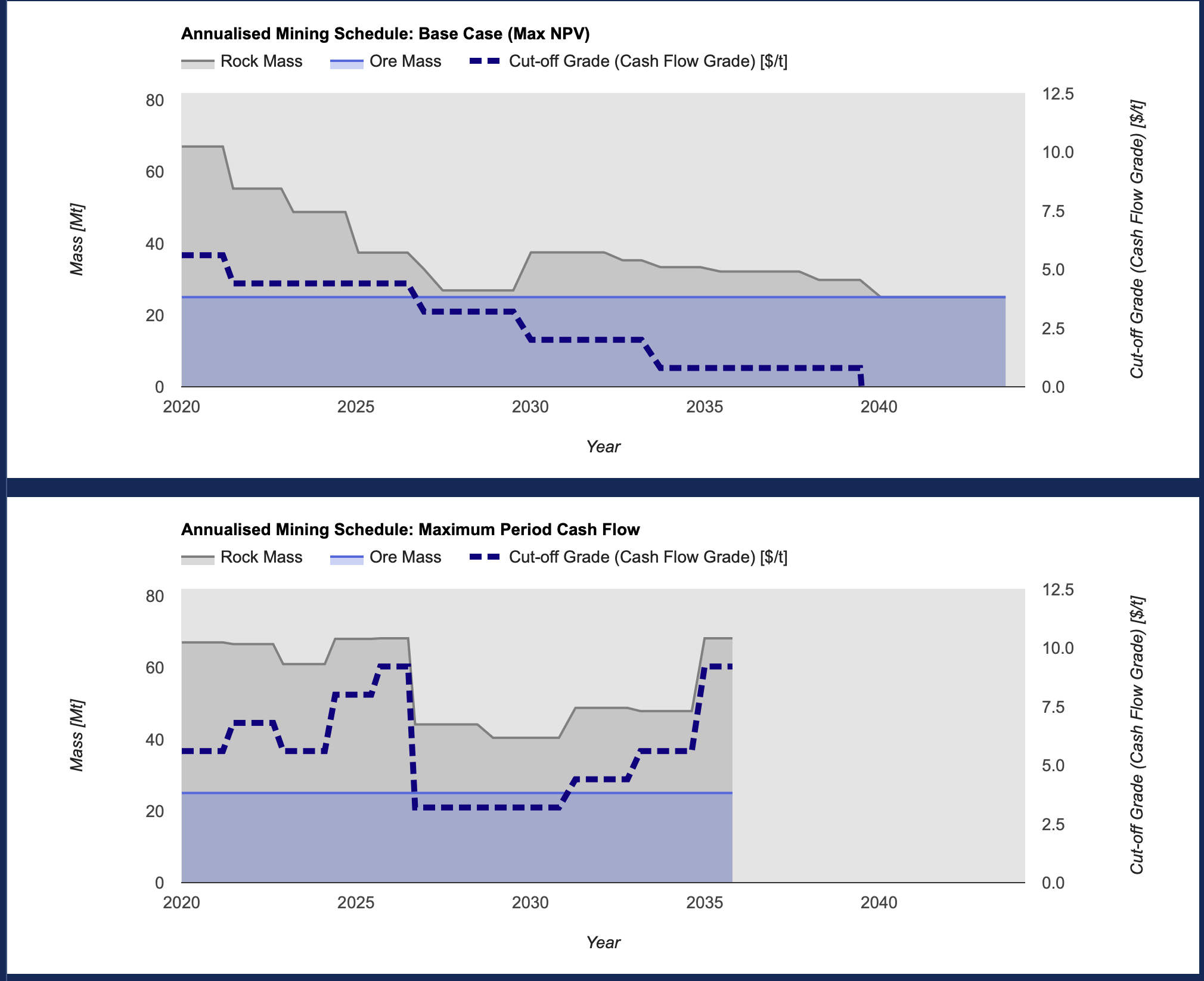
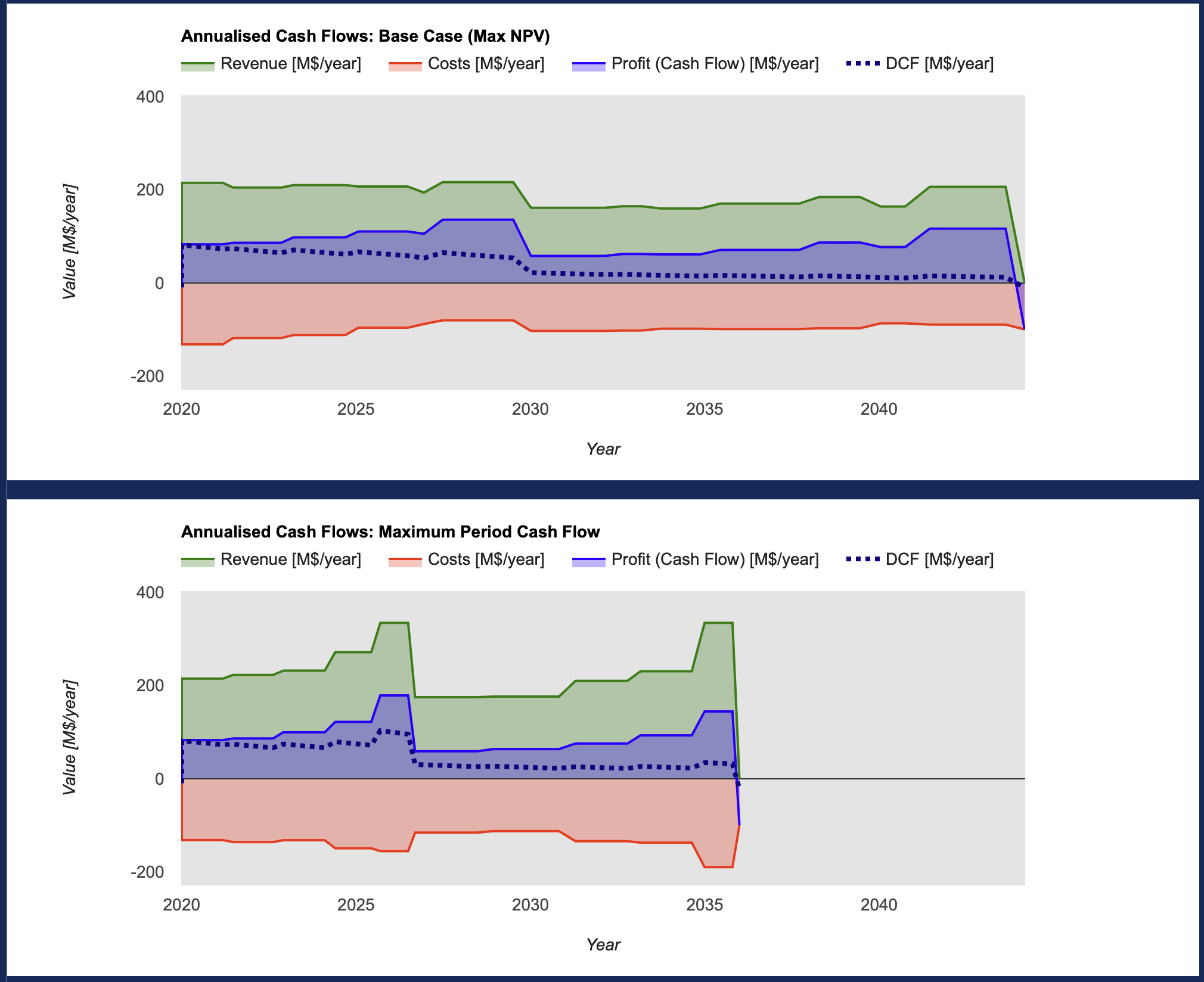
Shows how to read the base-case schedule, NPV, life, ore and detailed result charts.
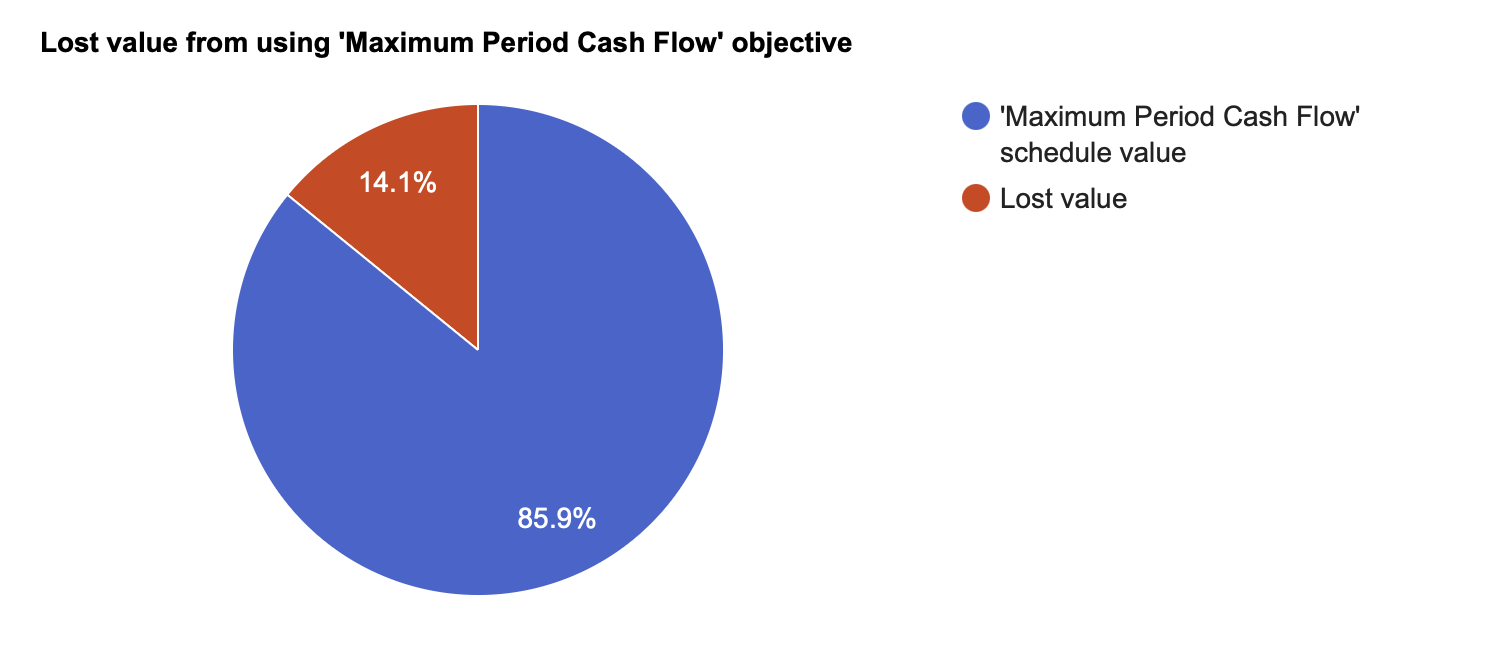
Compares maximising NPV with maximising reserve cash flow and explains why the strategies differ.
Contrasts whole-project NPV with maximising cash flow one period at a time.
Demonstrates why maximising project life is not the same as maximising project value.
Separates simply maximising a cut-off grade from optimising the cut-off policy for NPV.
Shows the unusable extreme produced when minimising cost becomes the objective.
Continue here to understand the dynamic-programming logic behind cut-off-grade optimisation.
Choose a video below to play it here.Defines a simple sequential mining problem and the formulas used by the backwards dynamic-programming method.
Works through sample calculations and a graphical view of the backwards algorithm.
Introduces the forward method as a response to the limitations of backwards optimisation.
Compares calculation effort and shows how the algorithms extend beyond a single cut-off policy.
Derives the formulas behind the well-known page 18 treatment of cut-off-grade theory.
Rapid Online Analysis
Use a consistent economic framework to understand interactions that are easy to miss when each assumption is considered in isolation.
Compare
Explore how NPV, cash flow, metal, reserves and cost-based objectives can lead to different strategic choices.
Test
Change economic assumptions and observe how the preferred strategy and size of the opportunity respond.
Understand
See how project-specific limits, recoveries and orebody characteristics interact with the economic objective.
A Practical First Step
Register free and use the supplied datasets to become familiar with the inputs, outputs and economic relationships.
Change one or more assumptions, compare the outcomes and identify the value drivers that matter most.
Develop a clearer understanding of why the preferred strategy changes, rather than treating optimisation as a black box.
Move into formal COMET training or include your own resource data when you need project-specific insight. A subscription is required to use your own data.
Further Reading
Continue into the economic principles behind value-based mine planning.